Meet the 6 winners of the 2025 PARE awards
These postdoctoral scholars show promise in their research of cancer, diabetes, gut bacteria, brain function and precision medicine.
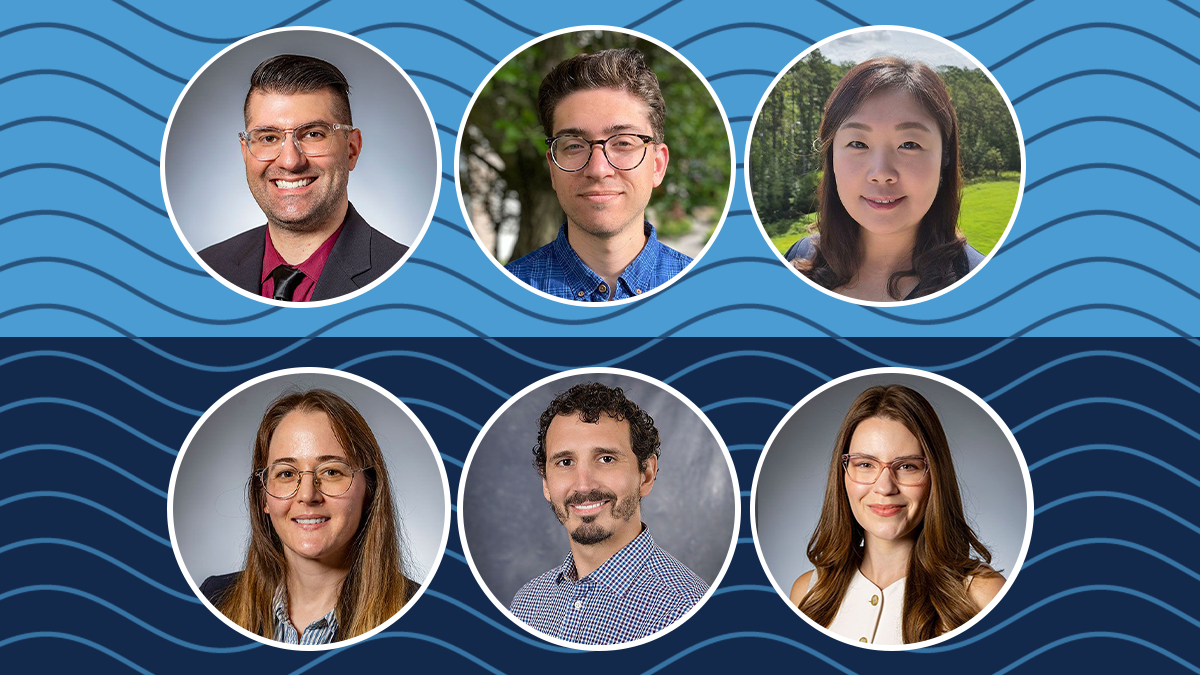
Each year, the Postdoctoral Awards for Research Excellence are given in recognition of the research promise demonstrated by individual postdoctoral scholars. The awards are open to postdoctoral scholars in all disciplines. Each recipient receives a monetary award of $1,200.
Here are the 2025 PARE winners:
Juhyun Ahn, UNC School of Medicine, microbiology and immunology department
In the lab of Janelle Arthur, Ahn’s research seeks to define mechanisms by which certain gut bacteria disrupt host-microbe interactions in inflammatory bowel diseases and colorectal cancer. Her work has revealed a presumed microbial trigger for intestinal fibrosis — a serious complication for many IBD patients that involves intestinal narrowing and blockages that require surgery. By further understanding this disease process and how to diagnose it earlier, researchers can create new ways to prevent and treat intestinal fibrosis and improve the lives of people with IBD.
Jeanna Campbell, Cecil G. Sheps Center for Health Services Research
Campbell’s research explores the impact of income, community resources and primary health care services on conditions like obesity and Type 2 diabetes. She is passionate about services tailored to meet community members’ unique health needs and preferences. She is helping implement two interventions — a culturally tailored diet to reduce inflammation and disease risk and a link to tailored disease prevention resources for rural community members.
Joaquin Douton, UNC College of Arts and Sciences, psychology and neuroscience department
In the Regina Carelli lab, Douton studies how addiction and negative emotions affect brain function and how these changes contribute to drug relapse. Using animal models, he tracks changes in brain circuits occurring due to addiction and tests highly translational treatment strategies to reverse these effects and restore healthy brain function. Douton’s goal is to turn these discoveries into therapies that help people recover from substance use disorders.
Christopher Genito, UNC Adams School of Dentistry, biomedical sciences department
In Lance Thurlow’s lab, Genito studies how diabetes makes people more vulnerable to potentially life-threatening infections. A recent discovery of the lab shows that diabetes promotes the development of antibiotic-resistant bacteria. Genito’s future work aims to understand how diabetes affects vaccine efficacy with the goal of protecting people with diabetes from acquiring preventable severe infections.
Eric Hurwitz, UNC School of Medicine, genetics department
In the Translational and Integrative Sciences Lab led by Melissa Haendel, Hurwitz does research that harnesses big data from multiple sources, including electronic health records, passive data from consumer-grade wearable devices and self-reported patient outcomes. He uses the data to develop personalized strategies for early disease detection and enhanced patient monitoring. Hurwitz’s goal is to combine data streams with personalized methods to promote a pro-active and preventative approach to human health for enhanced precision medicine efforts.
Marta Overchuk, Lampe Joint Department of Biomedical Engineering at UNC-Chapel Hill and NC State
In Imran Rizvi’s lab, Overchuk explores photodynamic therapy for cancer, a noninvasive approach using light and light-activatable molecules. Specifically, she investigates how PDT can overcome chemotherapy resistance to improve treatment efficacy and safety in preclinical models of ovarian cancer.