Institute for Trauma Recovery transforms care
Early interventions may prevent lifelong suffering for veterans and assault survivors, says director Dr. Samuel McLean.
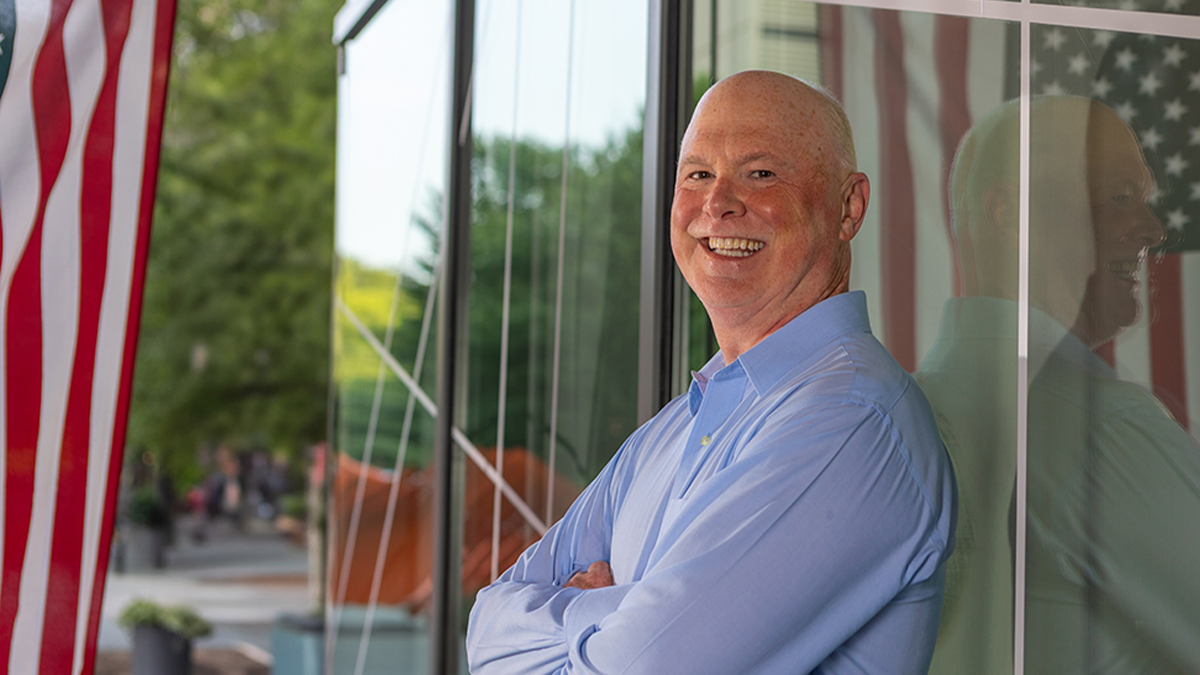
Dr. Samuel McLean found his calling in the chaos of the emergency room. He was often the first to encounter patients in the wake of car crashes, gun violence and sexual assault. And while he could treat their physical wounds, the psychological toll was a different story.
“It’s a very profound experience, one that drove me to this work much more than anything else,” he says.
Trauma survivors are understudied in research, so the interventions available to them are nearly the same as they were in the 1970s. McLean knew they deserved more — and that gap drove him from the ER to research.
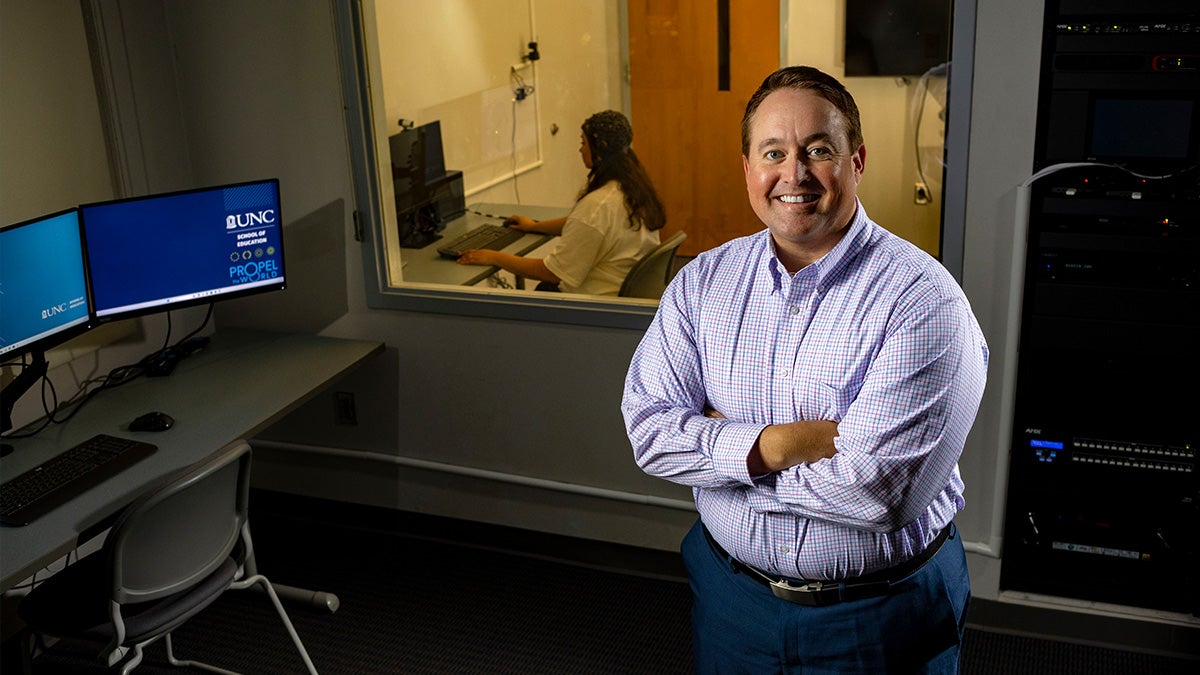
Now the director of the UNC School of Medicine’s Institute for Trauma Recovery, McLean is pioneering new ways to prevent chronic trauma-related symptoms. His research explores how the brain responds to trauma and tests early interventions to stop it from trapping survivors in cycles of pain and distress.
Neuroscience of survival
To maximize survival during threats, the human brain shifts into a state of heightened alertness. While this sharpens the ability to detect and respond to danger, it can also rewire the brain to remain hyperalert, causing ongoing physical and emotional distress and disrupting sleep.
For many service members, veterans and other survivors of trauma, this kind of rewiring results in daily suffering. Crowds, confined spaces and sudden noises — like fireworks — can trigger intense reactions. Some individuals experience acute stress disorder, which can resolve within weeks. But for others, symptoms lead to post-traumatic stress disorder, where the brain becomes stuck in survival mode.
McLean and his team are interested in both the short- and long-term impacts of these changes and are trying to determine why they occur and how to prevent them.
“Our study participants, including sexual assault survivors and veterans, have so much to teach us and so much that we’re trying to learn from them,” McLean explains.
Shining a light on mental health

See more stories about how how Tar Heel students, faculty and staff are using outreach and research to prioritize mental health on campus, across North Carolina communities and beyond.
Rebooting the brain
McLean’s research is partially focused on interventions for active-duty military personnel and veterans who often experience extreme repeated stress during deployment. The Institute for Trauma Recovery is currently testing the efficacy of a military intervention called iCOVER — a strategy to help service members regain brain function during moments of extreme distress.
iCOVER is a six-step intervention for peers of trauma survivors. The peer is taught a series of tasks to complete with the person experiencing distress. By making eye contact, engaging with direct questions, establishing a clear sequence of events and requesting immediate action, the intervention activates the rational brain to help soldiers regain control. And it takes less than a minute to complete.
While this intervention is already being used across NATO militaries, especially in Ukraine, there is no empirical data to prove it actually works. McLean’s team is testing it in civilian trauma centers to find out whether the intervention measurably improves neurocognitive function in highly distressed patients.
A better tomorrow
McLean’s research also focuses on sexual assault survivors who face long-term psychological distress but receive little follow-up care. That’s where the Better Tomorrow Network comes in. The initiative from the Institute for Trauma Recovery connects this population with ongoing research, ensuring their voices are heard and that new interventions are tested.
One intervention being tested uses written exposure therapy to help survivors engage with their experiences through guided writing exercises. Early results suggest this simple intervention could reduce PTSD symptoms and improve general mental health.
“The fact that it is a low-cost telehealth intervention means that it could reach trauma survivors across the state of North Carolina,” McLean remarks. “We are very excited about our preliminary results and hope that it is also effective in large-scale testing.”
Read more about the Institute for Trauma Recovery.
Impact Report
The UNC Institute for Trauma Recovery is leading groundbreaking research to improve outcomes for survivors, funded primarily by grants from the National Institutes of Health and One Mind.
North Carolina is home to over 600,000 veterans, making trauma recovery research a critical priority for the state.